
Dr. Panda Racers
Dr. PandaRacing
3.910.00 Reviews
- Version
- 26.3.14
- Installs
- 50.00K
- Age Rating
- Everyone
Screenshots
Our Review of Dr. Panda Racers
 Analysis by Appyee
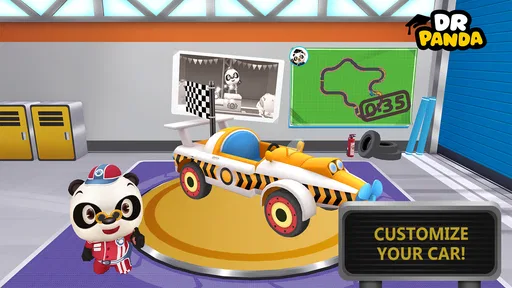
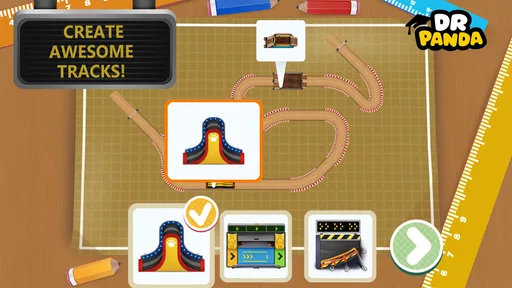
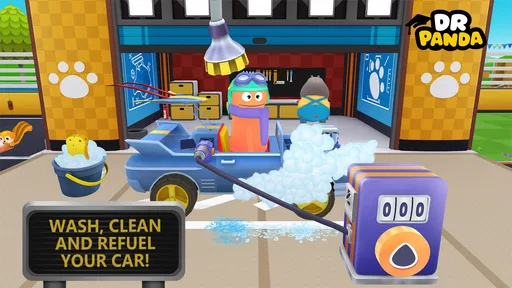
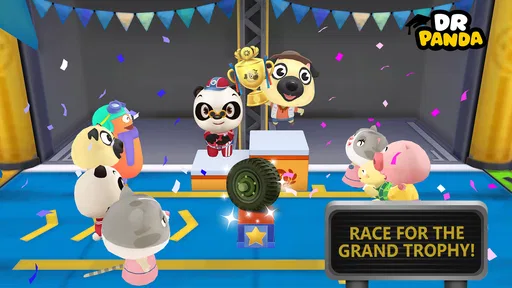
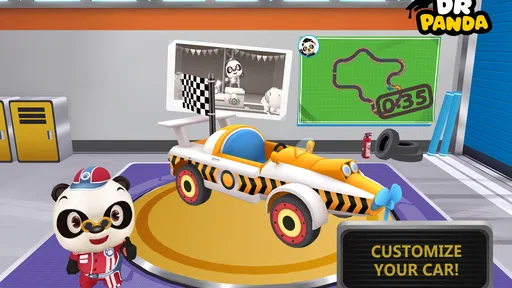
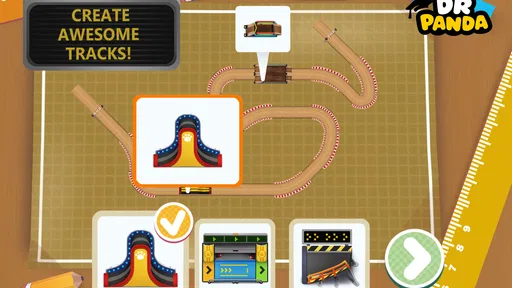
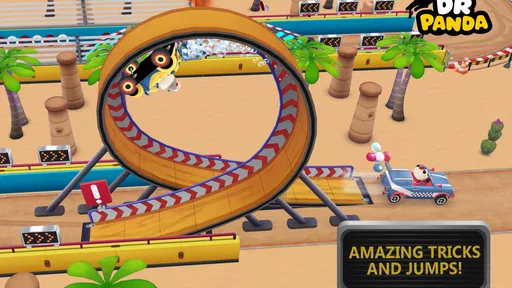
I spent time with Dr. Panda Racers as a small, child-friendly racing game built around making things before driving them. Its central appeal is easy to understand: you assemble a car, shape a track, and then race on the result. That combination gives it a more playful feel than a conventional racing title, because the activity is not only about finishing first. You also get to decide what the vehicle and course should look and feel like before the race begins.
It comes from Dr. Panda, a developer known for accessible experiences aimed at younger players. This release sits in the racing category, carries an Everyone age rating, and is listed at a 3.9 average from roughly four hundred ratings. I would describe it as a gentle creative racing toy rather than a serious driving simulator. That distinction matters: children looking for experimentation and short play sessions may enjoy it, while players expecting deep vehicle tuning, competitive rankings, or realistic handling will probably find it too simple.
Building a race that feels like your own
Before I judge the racing, I look at how easily a young player can move between making a car, shaping a course, and trying it out. That sequence gives the game its own rhythm, and it can help adults decide when to offer a hint and when to let a child explore. The next section considers how the hands-on building changes the feel of a race.
The paid model is straightforward
The game is priced at $3.99, so it is a paid download rather than a free entry point. That gives the purchase a clear advantage for families who prefer to pay once instead of starting with a free game and then dealing with possible interruptions or extra purchases. At the same time, the price means the first question is not whether it costs anything, but whether the creative play lasts long enough for your child or family to return to it.
I think the cost is easiest to justify when the game is shared between siblings or used as a calm, repeatable activity. A child can create one race, drive it, change the layout, and try again without needing a new objective every time. If the intended player only wants a large collection of cars, realistic competition, or a long progression system, the paid price may feel less attractive because the value here comes from replaying the creation process rather than unlocking a huge career.
It is also worth separating the purchase decision from the game’s audience. An Everyone rating makes it suitable for a broad age range, but that does not mean every age will find the same depth. Younger children may enjoy the direct cause-and-effect of assembling and racing. Older children who already play more demanding racing games may see the controls and structure as an introductory experience. I would make the purchase for a younger player who likes pretend play, construction, and repetition, not for someone asking for a console-style racer on a phone or tablet.
What the core loop delivers
The strongest part of the design is the order of activities. You do not simply select a finished car from a menu and immediately enter a race. The preparation gives the session a small sense of ownership. Choosing how the car comes together can make the vehicle feel like a personal creation, while building the track changes the setting for the drive that follows. Even when the race itself is brief, the player has already invested attention in making the challenge.
That structure creates a useful loop for children who like to test ideas. A track can be treated as a drawing that happens to be drivable: change its shape, race it, notice what works, then rebuild it. This is a more constructive use of a racing theme than simply watching a car move around a fixed circuit. I particularly like that the game can turn a short waiting period into an activity with a beginning, a middle, and a clear result.
In an everyday situation, I could see this working well during a quiet afternoon when a child wants screen time but is not ready for a highly competitive game. They might assemble a car, create a track, run a few races, and then show the finished course to a parent or sibling. The adult does not need to understand a complicated upgrade tree to join in. Asking why a certain track was chosen, or suggesting a new route, is enough to make the play more social.
Why the creation tools matter more than the racing
My main insight after playing is that the racing is the payoff, not the whole product. If you judge it only by speed, overtaking, and challenge, it may seem limited beside established mobile racers. Its better idea is that the player gets to act as a designer before acting as a driver. That makes the game closer to imaginative construction with a racing finish than to a traditional competition.
This also explains why repetition can work here. In many racing games, repeating the same event is mainly about improving a time or earning a reward. Here, repetition can mean making a different car or track and seeing how that changes the experience. The motivation is personal experimentation. A child who enjoys changing details and immediately seeing the result may get more from one simple course than from a large catalog of fixed tracks.
There is a practical trade-off in that approach. Creative freedom is valuable only when the player enjoys creating. A child who wants instant action may regard the assembly and track-building steps as an obstacle. I would watch the first session for that reaction. If the player keeps returning to the building stage, the game is probably a good match. If they repeatedly skip toward the race and lose interest when asked to construct something, a more direct arcade racer would be a better choice.
Controls and learning curve for younger players
The game’s age positioning suggests an accessible experience, and that is how I would approach it. It is not designed around the kind of technical driving knowledge needed for a simulation. The appeal is in understanding simple actions quickly and seeing the outcome. That makes it a reasonable first racing game for a child who is still learning how a touchscreen game responds to taps, swipes, or other direct input.
Parents should still expect a little hands-on learning at the start. Younger players may need help understanding the difference between assembling the car and controlling it during a race. They may also need encouragement to treat a failed run as information rather than as a problem. A useful approach is to let the child make one deliberately unusual track, race it, and then decide what to change. That keeps the learning inside the game instead of turning the adult into a constant instructor.
I would not recommend it as a game for a child who needs a strong competitive structure to stay engaged. There is a difference between accessible and motivating. Simple controls can remove frustration, but they can also reduce the sense of mastery for experienced players. The right audience is someone who values making and pretending, with racing as an inviting theme.
Where it sits beside other mobile racers
Compared with the usual arcade racing alternatives, this game trades speed and spectacle for participation. Many mobile racers focus on a ready-made lineup of vehicles, fast events, visual effects, and progression through increasingly difficult races. That format is better if you want a conventional sense of advancement or a more intense challenge. Dr. Panda Racers takes the opposite route by making the player part of the setup.
Compared with construction or sandbox games, it offers a narrower but clearer purpose. It is not trying to be an open-ended world where every object can become part of a large project. The creative activity is tied to cars and tracks, which can be an advantage for a young player who needs a focused idea rather than unlimited choices. The limitation is equally clear: once the child has explored the available building possibilities, the game may not offer the same breadth as a larger sandbox.
That comparison helps define its value. I would choose this over a typical free racing game when I wanted a paid, contained activity with a creative starting point. I would choose a more advanced racer when I wanted competition, detailed customization, or a longer-term challenge. I would choose a broader building game when the child wanted to create things beyond vehicles and race courses.
Small details that improve repeat play
One useful way to get more from the game is to give each session a simple design challenge. Instead of asking a child to “play a race,” try asking them to build a course that feels easy, then one that feels surprising, and then one that another person can complete. This turns the construction tools into a reason to think about layout and playability. It also prevents the activity from becoming a sequence of identical races.
Another good workflow is to let the child create first and explain afterward. Young players often discover their own logic through trial and error. If a track does not work as expected, asking what they would change encourages observation without making the experience feel like a lesson. The game’s value is not only in the finished race; it is in the connection between a choice and what happens on screen.
A third tip is to use shared decision-making without taking control away. One player can choose the car’s construction while another suggests the track, then they can swap roles for the next run. This makes the paid purchase more useful in a family setting because the game becomes a small collaborative activity rather than a solitary race. It is especially suitable for short turns, since the creative handoff gives each player something meaningful to do.
Limitations you should understand before buying
The biggest limitation is depth. The game’s premise is appealing, but it is intentionally approachable rather than demanding. Players looking for a detailed physics model, extensive tuning, a serious campaign, or a broad competitive system should not buy it expecting those things. Its simplicity is part of its design, yet simplicity can feel shallow when the player has already mastered the basic pattern of build, race, and rebuild.
The other trade-off is that the replay value depends heavily on the player’s imagination. Two children can receive the same game and have very different experiences. One may keep inventing new combinations and courses, while another may run through the obvious possibilities and move on. That is not a flaw in the controls; it is a reminder that this is a creative toy with racing elements, not a content-heavy racing package.
The paid price also raises the importance of knowing your child’s habits. If they regularly enjoy pretend play, arranging objects, and trying variations, the purchase has a better chance of feeling worthwhile. If they usually need constant rewards, unlocks, or increasingly difficult goals, the game may not hold attention for long enough. I would make that audience check before buying rather than relying only on the Everyone rating.
Compatibility is another practical point. The listed minimum operating system is Android 7.0, and the current version is 26.3.14. Before installing, I would check the device’s software version and available store compatibility, particularly on an older tablet used by children. That is a simple step, but it avoids buying a game and discovering that the intended device cannot run it.
Who will get the most from it?
I see the best fit as a younger player who enjoys vehicles but does not need realistic driving. The game can serve as an introduction to racing controls while also giving that player a reason to make choices before starting. It is also a good option for parents who want a contained paid game instead of a free title built around a more aggressive progression model.
It may work particularly well for a child who likes to repeat an activity with small changes. The child can build a course, race it, decide that a turn or arrangement is not right, and try again. That kind of repetition is not about grinding for a reward; it is about refining an idea. I would also consider it for siblings who can take turns designing and driving, provided both are comfortable with a simple racing experience.
I would skip it for a dedicated racing fan, an older player seeking technical control, or anyone who wants a large competitive ecosystem. It is also not my first recommendation for a child whose main interest is open-ended building with no particular theme. In those cases, a more advanced racer or a broader creative game would offer a closer match, even if it lacks this title’s focused car-and-track concept.
My buying recommendation
After weighing the experience against its $3.99 price, I think Dr. Panda Racers is a sensible purchase for the right player, but not a universal recommendation. Its value comes from combining simple racing with hands-on creation. The game gives a child a clear activity to understand, enough room to make personal choices, and a quick result that can be changed and tested again.
I would buy it for a younger child who likes cars, making things, and short imaginative sessions. I would also recommend it to a family that wants an easy game to share without turning every play session into a competition. The paid format makes the decision more deliberate, but it can be worthwhile when the game becomes a repeatable creative activity rather than a one-time race.
I would skip it when the expected value is advanced racing depth. There is no reason to choose a gentle construction-focused racer over a more demanding alternative if the player wants mastery, realism, or a long progression path. For everyone else, the deciding question is simple: does the player enjoy building the race as much as driving it? If the answer is yes, this small game has a clear personality and earns its place as an approachable racing experience.
Verdict
Strengths of Dr. Panda Racers
- Simple controls make it accessible for younger children.
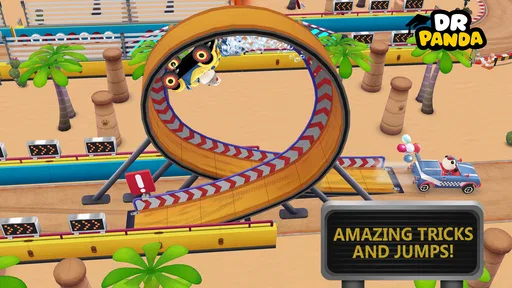
- Bright, colorful tracks are appealing and easy to follow.
- Characters and vehicles offer fun variety during races.
- Short races fit well into brief play sessions.
- Designed for children without aggressive online competition.
Limitations of Dr. Panda Racers
- Limited track variety may feel repetitive over time.
- Gameplay can be too simple for older children.
- Some vehicles or content may require in-app purchases.
- No strong multiplayer experience for playing with friends.
- The app may use noticeable storage on older devices.
Other Releases by Dr. Panda
View All
Dr. Panda Train
Educational3.7

Dr. Panda Restaurant
Educational3.9

Dr. Panda Restaurant 2
Educational4.1

Dr. Panda Bath Time
Educational3.8
Similar Picks in This Category
View All
Hill Climb Racing
Fingersoft4.3

Dr. Driving
SUD Inc.4.2

Traffic Rider
skgames4.5

Asphalt 8 - Car Racing Game
Gameloft SE4.6

Race Master 3D: Car Racing
Beresnev Games4.6

Extreme Car Driving Simulator
AxesInMotion Racing4.3
Frequently Asked Questions
What is Dr. Panda Racers, and how is the game played?
Dr. Panda Racers is a colorful, family-friendly racing game designed mainly for young children. Players choose a character and vehicle, select a track, and race through playful environments while collecting items and discovering interactive surprises. The controls are intentionally simple, making it easy for children to steer, accelerate, and enjoy races without needing advanced gaming experience.
Is Dr. Panda Racers suitable for young children?
Yes, Dr. Panda Racers is aimed at children and offers an accessible experience with bright visuals, friendly characters, and straightforward gameplay. There is no emphasis on realistic violence or complicated competition. Parents should still review the recommended age rating for their child’s device and consider playing together initially, especially to explain menus, controls, and any available purchase options.
Does Dr. Panda Racers require an internet connection?
The core racing experience can generally be enjoyed offline after the game has been installed, which is convenient for travel or situations without Wi-Fi. However, an internet connection may be needed for downloading the application, installing updates, restoring purchases, or accessing certain store-related functions. Availability of specific features can vary depending on the version and platform.
Does Dr. Panda Racers include advertisements or in-app purchases?
Dr. Panda games are commonly designed as child-friendly premium experiences, but the exact business model may differ between editions, regions, and Android or iOS versions. Before downloading, parents should check the current store listing for advertising and in-app purchase information. If purchases are available, device-level parental controls and password protection are recommended to prevent accidental transactions.
What devices are compatible with Dr. Panda Racers?
Compatibility depends on the operating system, device model, and the version currently offered in the Google Play Store or Apple App Store. The game may require a relatively recent version of Android or iOS and enough free storage for installation and updates. Checking the official store page on the intended device is the safest way to confirm compatibility before downloading.
Play our best games!


